



The Weavers of Chamba: a shawl made at home
Share
No factory building. No conveyor belt. No boss watching the clock. Just a woman, her loom, and the light that falls through her window in the morning.
Weaving at home — and making a living
Around Chamba, in the villages of Uttarakhand, looms stand in living rooms. Not as decoration — but as workplaces. The weavers of PRADIYA work from home. They set their own rhythm, their own time.
A weaver doesn't have to commute. She doesn't have to enter a factory, work a shift, or leave a child alone. She weaves when she weaves. And what she weaves receives her full attention — because no one tells her she has to be faster.
That sounds obvious. It isn't. For women in this region, the home loom is often the only way to earn their own income — without having to leave the village.
The knowledge that lives in the hands
In Chamba, there is no weaving certificate, no academy, no diplomas. The craft is passed down — from mother to daughter, from aunt to niece, sometimes from an old neighbor to a young girl who simply watches and eventually starts to participate.
This knowledge has no app, no tutorial, no manual. It sits in the fingers. In the feel for how much tension a thread needs. How good wool feels before the first centimeter is woven. How a scarf wants to be.
Every PRADIYA scarf carries this knowledge. Not as a marketing promise — but because there's no other way to make it.
A scarf. Many hours. One woman.
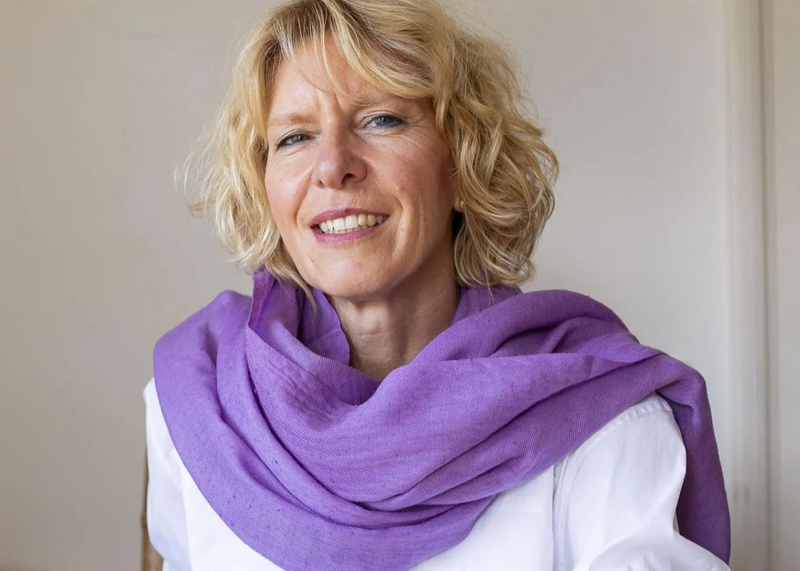
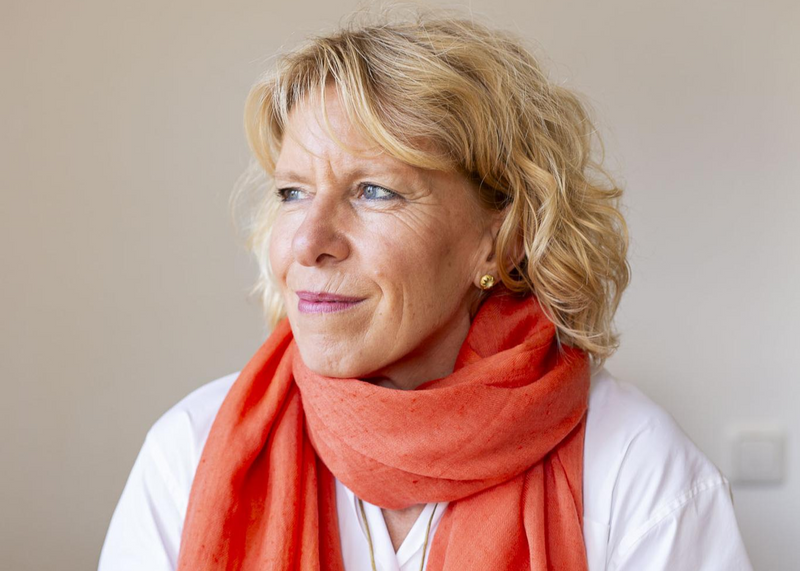
A PRADIYA scarf is single-colored — no patterns, no distraction. The quality lies in the wool, in the density of the weave, in the consistent tension that only comes from years of weaving.
The angora wool comes from farms in Chamba and Oda, Nepal — gently cut by hand, no machines. The weaver knows this material. She knows how it behaves, how it stretches, how it reacts to warmth.
What emerges in the end is not a product. It is the visible work of a woman who knows what she is doing.
What fair means — here, concretely
Fair is not a label. Fair is a number on a bank statement that is sufficient at the end of the month.
The weavers around Chamba are paid by PRADIYA according to local living costs — not according to international minimum standards, which look good on paper but don't work in everyday life. A weaver in Uttarakhand has different costs than a seamstress in Bangladesh or a tailor in Vietnam.
What counts: She can live from her work. She doesn't have to take a second job. She stays in her village.
From the loom in Chamba to Oda, Nepal
The weaver in her home near Chamba knows where her scarf goes. Not just into a box, not just into a shop — but also to Oda, Kalikot District, Nepal.
Each scarf sold gives a child at the Oda Children's Home one month back: school, meals, a safe home. The weaver makes this possible — not through donations, but through her work.
This is the connection that PRADIYA carries: a woman in Uttarakhand weaves, a child in Nepal learns.
Three questions
Do all weavers work from home?
Yes. The looms are in the weavers' homes, spread across several villages around Chamba. Karina visits them regularly — personally, not through intermediaries.
Can I visit the weavers?
Yes. Anyone who wants to visit Chamba can arrange it through PRADIYA. The weavers welcome visitors — and show how a scarf is made.
How many weavers work for PRADIYA?
A small, fixed group — no anonymous network, no changing suppliers. The same women, the same hands, the same quality.
A loom in the living room. A child going to school.
That is PRADIYA — from Chamba, Uttarakhand to Oda, Nepal.
🌍 Chamba, Uttarakhand, India · Oda, Kalikot District, Nepal